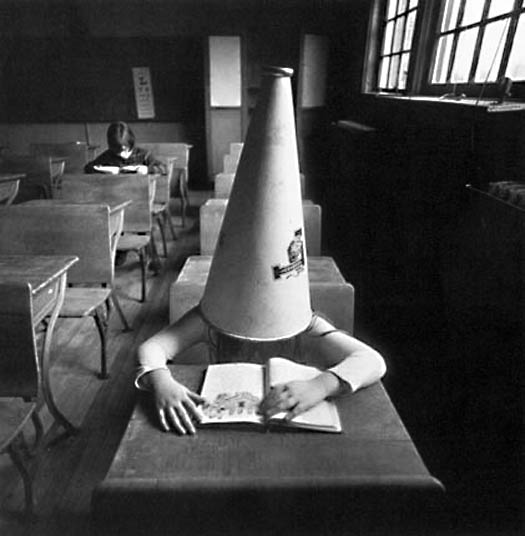
I was recently interviewed for “Class Dismissed,” the first full-length documentary devoted to exploring homeschooling as a viable alternative to the industrial school model. Class Dismissed will challenge its viewers to take a fresh look at what it means to be educated, the difference between education and schooling and speak to the many misconceptions that surround homeschooling, while offering up a radical new way of thinking about the process of education.
In this video excerpt I explain why we no longer need to go to school to learn what we need for success.
You have read this article home education /
homeschooled /
homeschooling /
unschooled /
unschooling
with the title unschooled. You can bookmark this page URL http://machining33.blogspot.com/2012/08/why-going-to-school-to-learn-is-no.html. Thanks!
I’ve been a public school educator and administrator for more than a decade and have loved my work for most of my career. I have a passion for making learning real, relevant, engaging, fun and meaningful for learners. I have had wonderful opportunities to bring that to life in my work such as with the Teachers College Reading and Writing Project, Joe Renzulli’s Schoolwide Enrichment Model, and the programs I’ve lead to integrate technology into learning like this one.*
So, some may wonder why I’m interested in homeschooling. Let me start by explaining there are different types of homeschooling. I see it as sort of a continuum that goes from "doing school at home" to "life without school." The "school at home" works for many families, but that was not what really struck my interest. I was more interested in how a "life without school" works. Some people call this unschooling, some call it natural living, some call it organic learning or life learning. For purposes of this article, I’ll call it unschooling.
One reason unschooling was so fascinating to me (others are here) is because I’ve spent a good portion of my life learning about how people learn and supporting children and adults in their learning. I was trained in various techniques, learned various methods and models, and I believed that people learned from being taught in school. What's strange is that I believed this even though, when I look back, I realize I never learned that way.
Unschooling shattered every myth I held to be true and made me question everything I’d been taught about learning. Not only that, but upon studying how unschooling works, I discovered people that seemed to be really smart, passionate, successful, and satisfied with their lives. All that and they never had to be tortured in an Algebra, History, Science, or English class! They learned a lot even though they were never forced to take a test. They didn’t have to be at school every day at some ungodly hour. They learned to read and write without classes or teacher, when they were ready, which may be as early as 2 or 3 or as late as 11 or 12. I learned there was a whole world of peaceful living and learning where the parents and children and grown children seemed quite happy.
This was of great interest to someone whose passion is to support learning that is real, relevant, engaging, fun, and meaningful. I also felt kind of cheated and angry. Cheated that I had been forced to do all these things that I didn’t really need to do, rather than discover and explore my passions, talents, and interests. Angry that kids, like those featured in Race to Nowhere, were being forced to do the same. In many cases this leads to detrimental effects that include mental, physical, and emotional distress and even attempted and successful suicide. There were cases where schools were bullying parents and their children for not wanting to comply with their demands even though it was making the child sick. The school system I worked in moved from being one where "children were first" to one where "data comes first" and it was the school’s role to extract it.
I also started a group specifically created for parents, students, teens, and teachers frustrated with traditional schooling to come together to discuss the more effective options they are pursuing. This is a wonderful group that I encourage anyone interested in pursuing this path to join by visiting this link. If you do, we have a weekly live chat and you will find discussions about topics like the ones below.
Ironically after all the years I’ve spent being schooled on how to learn, in the end I discover that for many, learning can be best achieved without a school or a teacher. If you want to learn how, I hope you’ll take a look at some of the material I've shared and keep the conversation going in our group.
____________________________________________
*Unfortunately there has been a recent shift in educational priorities where I work, but that's fodder for another post.
You have read this article DIY Learning /
homeschool /
homeschooling /
unschooled /
unschooling
with the title unschooled. You can bookmark this page URL http://machining33.blogspot.com/2012/01/why-innovative-educator-cares-about.html. Thanks!
In recent years, homeschooling has seen a rise in popularity, with more and more parents deciding to educate their children outside of school. Some parents (and their friends/family) who choose this path are concerned about their child's ability to move on to college should they choose that path. Things are easier for homeschooled college students today than they were in the past as more and more colleges have seen great success with students from non-traditional education backgrounds. Today, homeschool students often enjoy easier admission, better college performance, and even the opportunity to enter college with several credits already earned. Read on, and you'll find out more about what the homeschool college student experience is like today.
Homeschoolers often enter college with more credit Homeschooled students are able to work at their own pace, and as a result, students have the freedom to move significantly faster than those in a traditional classroom. Michael Cogan, a researcher at the University of St. Thomas, discovered that homeschool students typically earn more college credits before their freshman year than traditional students, with 14.7 credits for homeschoolers, and 6.0 for traditional students. Earning college credit before freshman year can save thousands of dollars and shave time off of a degree. The 14.7 average credits for homeschoolers represent a full semester of freshman year, which is typically 12-15 credit hours.
Homeschool students do better on the SAT and ACT Perhaps benefiting from personalized test prep, homeschool students typically score higher on standardized college admissions tests. The homeschool average for the ACT was 22.5 in 2003, compared with the national average of 20.8. The SAT was no different, with a homeschool average of 1092 in 2002, and a national average of 1020. ACT and SAT scores are very important for college admissions and even financial aid, so doing well on these tests is vital to a great college experience.
Homeschool GPAs are consistently higher As a homeschooled student, you work on a flexible schedule. Young children may rely greatly on their parents for scheduling and instruction, but high schoolers typically become more autonomous in their studies, learning key skills for success as independent students in college. Research indicates that this time spent learning how to study independently pays off, as homeschoolers typically have higher GPAs than the rest of their class. Homeschool freshmen have higher GPAs in their first semester at college, with 3.37 GPAs for homeschoolers, and 3.08 for the rest. This trend continues with an overall freshman GPA of 3.41 vs. 3.12, and senior GPAs of 3.46 vs. 3.16, indicating that homeschoolers are better prepared for college.
Homeschooled students are more likely to attend college Homeschooled students seem to be more likely to participate in college-level education. As reported by the Homeschool Legal Defense Association, more than 74% of home educated adults between 18-24 have taken college level courses. This rate is much higher than the general US population, which comes in at 46% for the same age range.
Homeschoolers are everywhere Patrick Henry College is one college that specifically caters to the homeschool population, but homeschoolers are increasingly accepted in a wide variety of colleges and universities. In fact, homeschoolers are now in over 900 different colleges and universities, many of them with rigorous admissions. Some of these colleges include Harvard, Cornell, Princeton, Dartmouth, Brown, and Rice University.
Homeschooled students are more likely to graduate Making it to college is one thing, but actually sticking around and graduating is another. Students who have homeschooled will typically do better than other students, with a slightly higher retention rate, at 88.6% vs 87.6% for traditional students. Graduation rates show a higher disparity between homeschoolers and the national average, with 66.7% of homeschooled students graduating, compared to 57.5%.
Some colleges actively recruit homeschool students Homeschool students have proven themselves to be so outstanding that several colleges have begun to actively recruit them. Boston University, Nyack College, and Dartmouth are among them, with a Dartmouth College admissions officer recognizing, "The applications [from homeschoolers] I've come across are outstanding. Homeschoolers have a distinct advantage because of the individualized instruction they have received."
Homeschooled students are very likely to succeed in college Research and probability indicates that homeschooled students typically do very well in college, not just academically, but socially as well. Skills learned in homeschooling translate very well to the college campus, with strong self-discipline and motivation. Colleges recognize this advantage, including Brown University representative Joyce Reed, who shares, "These kids are the epitome of Brown students." She believes they make a good fit with the university because "they've learned to be self-directed, they take risks, they face challenges with total fervor, and they don't back off."
High school transcripts are often not required for college admissions Although traditional students will typically be expected to submit their high school transcript, homeschooled students usually do not need one, submitting other information instead. Sixty-eight percent of US universities will accept parent-prepared transcripts. Others will take portfolios, with letters of recommendation, ACT or SAT test scores, essays, and more, allowing homeschooled applicants flexibility in admissions.
Homeschoolers can play college sports As long as they meet standardized guidelines, homeschooled athletes can be awarded freshman eligibility to participate in college level sports. The number of homeschooled students participating in sports is growing as well, with up to 10 each year in 1988-1993, and as many as 75 students in the late 90s. Homeschool waiver applicants are typically approved, and in the 1998-1999 school year all applicants in Divisions I and II were approved, indicating not only an increased interest in college sports from homeschoolers, but an excellent openness in participation.
Many homeschoolers are National Merit Scholars The National Merit Scholar program is an academic competition offering prestige and cold hard scholarship cash for high achieving students. The number of homeschool National Merit Scholars is increasing at a high rate: in 1995, there were 21 homeschool finalists, compared with 129 in 2003, a 500% increase. Homeschoolers are clearly doing well in their studies, and as a result, are reaping the rewards in scholarship money to use in school.
Homeschooled students may have higher college acceptance rates Colleges and universities often recognize that homeschooled students tend to be exceptional in their academic performance, and combined with advanced studies and extracurricular activities, make great candidates for admission. In addition to actively seeking out homeschooled applicants, colleges may also be accepting more of them. In the fall of 1999, Stanford University accepted 27% of homeschooled applicants. This doesn't sound like a lot, but it's an incredible number when you consider that this rate is twice the acceptance rate experienced by public and private school students admitted in the same semester.
Homeschool students are often in honors programs High achieving homeschool students can benefit from advanced curriculum in college, which is why so many of them end up in honors programs once they go on to study at universities. At Ball State University, most homeschooled freshmen were admitted at a higher level than regular students. Eighty percent of homeschool students were admitted to "upper levels of admission," and 67% were in the Honors College.
Homeschooled students may receive federal financial aid Due to some confusion in the past, homeschooled students may have had to obtain a GED in order to qualify for financial aid. But the Homeschool Legal Defense Association indicates that laws have changed, and as long as students have completed their education "in a homeschool setting that is treated as a homeschool or a private school under state law," they are eligible for federal financial aid without a GED.
Many scholarships are available to homeschooled students Traditional scholarships are often open to homeschooled students, but there are also some created specifically for the homeschool crowd. In an effort to attract stellar homeschooled students for admission, colleges are developing homeschool scholarships. Belhaven offers $1,000 per year, College of the Southwest awards up to $3,150 each year, and Nyack College will give up to $12,000. With the high cost of a college education, these scholarships can really pay off for homeschoolers.
You have read this article college myth /
DIY Learning /
education reform /
homeschool /
homeschooling /
homeschooling and college /
problems with college /
unschooled /
unschooling
with the title unschooled. You can bookmark this page URL http://machining33.blogspot.com/2011/12/15-key-facts-about-homeschool-kids-in.html. Thanks!
Editor's note: The story of Jo-Anne Tracy's son who experts called ineducable, dispels many learning myths i.e. there are many lessons to learn from a dropout, you don't need a teacher or a class to learn, you don't need to know phonics to know how to read, ADD/ADHD can be a symptom of school, there's a lot you can learn by doing rather than by sitting and getting inside a classroom, and more. When she escaped the system, he was finally able to learn. I asked her to share his amazing story. Here it is.
Schools are failing many of our children. I know because they have failed my son and others like him. This happened because the system is run like a business. Children are expendable if they can not be educated cost effectively. Unions are more interested in teaching conditions and teachers benefits, than the individual children in the schools. Administrators, teachers, and legislators, educated in the past are unable to imagine the world of the future, yet they control the destiny of the students. There are better ways than our industrialized school system to care for our youth and until we begin offering such solutions, too many children will be left behind.
This is the story of how my son escaped the system and was given the freedom to learn naturally and exceed all expectations.
The “experts” diagnose my son
My son had been in his new school for only 3 months when the “experts” (a teacher, administrator, and school psychologist) told me, without any doubt in their minds, that I would be foolish to keep thinking that he had what it takes to succeed in any academic field and that he was being placed in a class where ineducable children would taught life skills and a vocation. I, his mother, who had watched him explore and investigate the world for 9 years, knew that they were wrong. However, the school system does little to honor or respect the insights of mere parents who don’t have the “credentials” necessary to properly identify “problem children” like mine. They refused to consider my input and explained they were not giving my son any other options.
When I had faced a situation with my high school-aged daughter that had caused me to question the school’s reasoning, I had been able to find an alternative school within the public school system where she could complete her graduation requirements. However, my son was in elementary school and there was no alternative program available without charge. We were struggling financially and could not afford a private school or an intense tutoring program. I had, recently, heard from my mother that she knew people who homeschooled their kids. Her comments about that situation had not been positive, but at least I knew that it was legal to not send my child to school.
Not send my child to school?
My father would have been horrified. He had dropped out of high school to fight in the war and afterwards had struggled to find a way to become a teacher. Teaching was his natural calling and I had been blessed as a child to grow up in a family where every situation had been a learning situation. However, I also knew that my son was not ineducable. He just needed time. He was diagnosed with ADD, but even with medication he found the classroom distracting. With no viable options for my son within the school, I removed him from the system.
Proving the experts wrong At first, the plan was to prove “the experts” wrong. I would spend one year teaching him to read and then, perhaps another working with him intensively to bring him to up to the academic level of his peers. The first few weeks were a blur, I had to find a way to teach him to read. Reading had been natural to my older children. They had both read fluently before entering school. I knew in my heart that my son, JAT, was just as bright, but was confused about why he could not read. I searched the internet. I went to the library and took out dozens of books about teaching reading, and at the same time let him choose books to take out. He would not take out picture storybooks. He wanted grownup books, books about geography and mountains, books about South American explorers. However, books were books and I was just happy he had chosen more books than the library would let him take. JAT had argued with the librarian and she finally relented, saying how lucky I was to have such a reader. I knew he just wanted to look at the pictures.
I was wrong.
One day about 3 weeks later, while I was writing to a reading expert, whose work I was reading, JAT came to me and asked me how they knew that Mount Everest was the highest mountain. I told him they had ways of measuring mountains and that we would search to learn more about that as soon as I finished the letter. I continued writing... then I stopped. How did he know that Mount Everest was the highest mountain? I went to find him on the couch looking at a book about Sir Edmund Hillary and his climb. There, under a picture, was a caption telling that Mount Everest was one of the highest mountains in the world. He has understood that piece of information. But yet, he could not identify the difference between the letters H and V. How was this possible?
I did not care how it happened, I knew that he could acquire information. He could reason. He was intelligent. He just did not read as schools said he should. He wanted me to read that book with him so he could learn more. Forget my research, forget my letter writing. We were going to read. And read we did. That winter, we read every book he could find about South America, the Andes Mountains, Climbing Mount Everest. Every once in a while I would bring out the math workbooks and the flash cards. He would do these grudgingly, so that we could get back to reading. I would read to him. I would leave out words and he would look at the book and figure out what it said. But, he still could not read Dolch word flash cards. He could read 4 syllable words that were important. However, the word ‘about’ was beyond him. I was beginning to see that his mind worked differently.
Some months later, when I explained to an online friend about how we were homeschooling, that I did not push math and phonics, that we just read and explored what he wanted to learn about, I was told that we were unschooling. Labeling what we were doing did not matter to me.
He was learning.
Never looking back My son never did return to school. He never expressed an interest. He read in the mornings until I returned from work about 10 am. He helped me begin a catering business and learned to make an excellent Shepherd’s Pie. At 12, he attended a local Sea Cadet program, and was selected to attend a 3 week camp, 1000 km from home.
Others worried that he would not adjust to working with a group. But, off he went with 5 other friends to this camp. I did not hear from him for days. He did call me after 2 weeks to ask me to send more spending money. He did just fine . . . No, better than fine. An adult leader at that camp told me that he had been one of the only ones who was not homesick, who did not argue about taking part in any activities. I no longer worried about socialization.
"We have to rethink what learning means. When my son has learned something, he has mastered it for life, not just for next week's test. That is knowledge." - Jo-Anne Tracey
Providing home learning options even when both parents work
We moved 3000 km away, to a remote northern Manitoba community. There were jobs there. My husband had recently lost his and we needed to move. I would need to work, at least part time. He was 13 and could spend time alone. I arranged to work split shifts. I could be home from 10:30 am - 2:45 pm. So off I went. On days I was needed to work through the day, my employer let him come and help out, stocking shelves and sit in the office discussing how to run a small business. He showed him how to repair a computer that needed a new power supply. He offered to help him build a computer if he could get the needed supplies. So, my son collected broken down computers from any source he could. Then, together my boss and my son built a computer that worked. What better computer lesson could a 13 yr old learn? This started a 16 month long passion with computers. He asked questions, learned more and soon he was fixing friends’ computers.
We were living in an apartment building at that time. The apartment manager offered him any computer he found abandoned in apartments, if he would help him out around the building. He learned to install doors and and caulk windows. He learned to patch drywall and lay tiles. He was becoming quite the handyman.
An unlikely tutor During this time, I had been offered a chance to run the store in the owner’s absence, but I would have to work full-time. I could not afford a qualified tutor, but I knew that at 14 he could not spend everyday alone in the house. He needed some social interaction. A very shy friend, a young female high school drop out offered to stay with him. She was intrigued that he could learn what he wanted when he wanted. But, she wanted ideas on what they could do, when they were bored.
I started to develop list of fun learning resources. I challenged them to learn history from songs and poems. They did. They learned about the Battle of New Orleans, thanks to Johnny Horton and they learned about the Crimean War through Tennyson’s The Charge of the Light Brigade. That was the beginning of JAT’s 'passionate about history' period. He had always been passionate about history, but now it was the focus of almost everything he did.
We were moving again. We had an offer to take over a store about 1000 miles closer to home and closer to his brother who was in university. He had to leave behind his drop-out tutor, who had discovered herself that learning could be fun. She promised that she would find a way to continue to advance her knowledge. And we were off to a new life.
Real Life Apprenticeship The position came with a house, but it needed work. The contractor asked my son to give him a hand. Together they renovated the bathroom and installed new fixtures, and my son decided that plumbing was a profession that he did not want to pursue in the future. He learned to use power tools from an expert. He learned the proper way to measure and check measurements. Somewhere along the line, he had learned enough about fractions to understand that 3/32” add to ⅜” was 15/32”. I have never determined where he learned about fractions. He had used them a bit with me when we had run our catering business, in the first years he had been at home, but he could add them and multiply them, what more could matter. He had asked questions and observed well enough that he was able to build himself bedroom furniture, including a desk and display shelves for his large Star Wars collection. He worked off and on with the contractor over the next 3 years. When we built our new store, he worked part-time with the contractor and was now proficient with tools.
Discovering life passion We were living in Canada’s richest gold mine community and where he was meeting geologists and talking about new strikes and other shop talk. This reawakened JAT’s interest in earth and geological science. He also developed a passion for space science. One day, he came to me and told me that he wanted to be a NASA planetary geologist. We discussed that it would take more than four years of university. He said he was willing to do the work. He researched and discovered he needed math including calculus, chemistry & physics. He also realized that he would need to improve his writing skills. Writing had never been easy for him, either the physical act of hold a pencil and forming letters or spelling words. However, he knew what he wanted to do and he was prepared to get it done. He was 15 and knew that his peers would be in grade 10. He had never worked much at math, other than what he used daily at home and at work. He had completed many science inquiries and experiments through the years, but had never learned any theory.
Taking ownership of learning He started with the Annenburg media video courses. He watched every one that was of interest. He watched every Nova movie and every TV show he could. We found chemistry courses online, starting with Chalkbored and MITs free courseware. He purchased an interactive physics program, complete with labs. He asked for more challenges like those I had given to him and his tutor a few years before. Together we designed more than 400 that he could choose from to show he had a well rounded education. He made a pinhole camera, studied ancient man in-depth and learned to play the flute. He studied grammar for 15 minutes a day. ALEKS, a unique online learning program allowed him to move from preAlgebra to preCalculus in just 19 months. He moved on to open courseware in Astronomy and Physics from Yale. I was learning that nothing was impossible when a student is determined.
I was still unsure about his writing skills. It was the year that he should be applying to universities, and I was concerned that he was not ready for essay writing. He had never written more than the one essay about ancient man. I suggested he take a university preparation course in essay writing. His results amazed me. This young man, who had been written off by the school system, received a 92% on his first essay. His average going into the exam was 84%, but he still faced his toughest challenge. He had to hand write his final exam. Until this point, all his written work had been completed using a keyboard and word processor. His handwriting still looked like a that of a young child. JAT could print, but not use cursive. He practiced for weeks, without improvement. He wrote to his tutor and expressed his concern. The tutor told him just to do his best. As long as he achieved 60% on the written exam, he would still get a B grade. The exam came and went. After 3 weeks the marks were available. They were very long weeks. When the day finally arrived, JAT called me excitedly. He had a final grade of 76%. Not bad, for the teen called ineducable at 9 years old by the school system.
My son was ready for university. He was also ready for life. JAT chose to remain at home and study through distance education, since the nearest university was 6 hours from home.. He wanted the support that the community, his friends and family could give him. He knows that he will have to complete his last year away from home. But he will be ready. He knows how to learn. He is not ineducable. The system was wrong. The system had failed.
Jo-Anne Tracey was a classroom mother who became a passion-led learning advocate, when the school system decided her 9 year old son did not have the ability to learn to read and write. So, the Tracey family left traditional schooling behind and became homeschoolers. After 9 years of a passion-led, unschool education, her son is now studying geoscience at university.
Jo-Anne, now advocates for passion-led learning. Recently, she created an online learning community, Discovery Portal Active Learning Community,www.discoveryportalalc.com offering homeschoolers the active learning challenge program that she designed with her son and other virtual learning opportunities.
You have read this article DIY Learning /
home education /
home schooled /
home schooling /
unschooled /
unschooling
with the title unschooled. You can bookmark this page URL http://machining33.blogspot.com/2011/11/mom-story-when-school-left-my-child.html. Thanks!
Guest post from Mariaemma Willis, M.S., LearningSuccess™ Institute
Home and school educators often wonder how a child's learning can be customized to meet their style needs, talents, and interests, when there are state standards and school district requirements to follow. Fortunately there are indeed ways to customize learning even when working with standards and requirements.
Focus on Modality
Suppose the course is U.S. History. At minimum you can provide the information that you are required to cover in different modalities. Non-print learners have a difficult time processing and retaining information from a text book. Many books have recorded versions available or if you are getting the information online, you can use any number of free text to speech programs. Audio books are also an option, as are videos of the books for picture learners. With the technology we have nowadays and so much being available through the internet, these options could be made available to all students.
Assignment options can also be provided to meet various modalities. Besides the traditional written report, students could create presentations using PowerPoint, Prezi, or record skits or videos. They might interview people and create a recording. They might present sketches of what they are learning or photograph an ongoing project and present like a portfolio.
Now what about assessment? We have found that one of the best strategies for both finding out what a student has learned, and for honing their skills, is to have them create their own assessments that they take as well as give to others studying this topic and even the adults who are helping them learn - it works like magic!
Explore Interests
Once you are comfortable providing for Modality needs you can go the next step. Suppose your student is interested in fashion, or medicine, or wars. It is possible to explore U.S. History through the topics: The history of fashion in the U.S., U.S. History through the Wars, etc. But that won’t cover the requirements, you say? Why not? The student can have fun exploring history through that interest and at the same time “check off” those benchmarks the rules say you must cover. The student might create his/her own book or any of the products described above, cleverly demonstrating knowledge of the required benchmarks, along with the topic he/she is exploring.
Unhampered by standards and requirements
If you are in an alternative learning situation unhampered by state requirements, then you can really customize!
In these cases students DO NOT have to follow a regimented program full of yearly requirements and credits. You can create an independent study program that meets your specific students’ needs and interests.
And, yes, the child can still go to college if that is the goal, plus there are lots of other options to explore!
Here is a sample 9th grade program of a student who is interested in the arts:
·Career Exploration
oText: Cool Careers for Dummies by Nemko
ofind an acting mentor, volunteer to assist teaching acting to younger children
·Arts
oDance, voice, piano, and acting/drama lessons
·Fitness
oDance, horseback riding, walk in morning, fitness center
·Personal Development
oLearning Success Institute Learning Style Course for Students
·World History through Dance
oChoose videos, books of interest, internet research
oCreate scrapbook, digital presentation, or video
For details on what a 4-year plan might look like visit this link
Other examples:
Students can study the history (world or U.S.) of wars, fashion, architecture, medicine, airplanes, or just about any topic of interest. History can be coordinated with literature – for example, the Dear America books are written as autobiographies and are the stories of characters growing up in a certain time period. For those who appreciate cartoons and are picture learners there are cartoon books for history and sciences.
Depending on their interests students focus on fashion, cooking, engineering, drama, the arts, and many other areas. Their programs can include internships, work experience, volunteering, or even starting a business. Skills in areas such as writing or math can be included as needed and in ways that work for their learning styles. Life skills, fitness, and financial literacy can also be included. In other words, school can really be what it was meant to be: preparation for life!
You can watch this video of a student who experienced this type of learning and is now a graduate in this video.
Mariaemma is co-author Discover Your Child’s Learning Style, and co-founder of LearningSuccess™ Institute. For the last 20 years Mariaemma’s passion has been to bring out the star in every person - adult and child. She is especially concerned about adults who have grown up with negative school labels (Learning Disabled, ADD, lazy, not working to potential, average, below average, even gifted!), and the number of children who continue to be diagnosed with learning disabilities and/or medicated.
Get your free copy of the eBook version of Midlife Crisis Begins in Kindergarten when you sign up for the Learning Success Institute newsletter here.
You have read this article DIY Learning /
education reform /
home education /
homeschooled /
homeschooling /
unschooled /
unschooling
with the title unschooled. You can bookmark this page URL http://machining33.blogspot.com/2011/10/personalized-learning-can-be-focused-on.html. Thanks!
I recently shared three radical ideas to transform education without school. In it, I shared Linda Dobson’s timeless article,When the School Doors Close: A Midsummer Night’s Dream where she outlines the transformation that would occur if schools ceased to exist and instead we engaged in community-centered learning. Rather than compulsory, age-based facilities, with community learning people choose to attend and learn about topics of deep personal passion and interest. There would be many options available to individuals of any age. The community takes ownership and responsibility of the learning and well-being of others. As my wise friend Jeff Pulver recently said, “The only difference between a dream and reality is making it happen.”
There is a community that is doing just that. I learned about this community from Arif Hidayat. Although we aren’t the same age, live on opposite ends of the earth, and don’t speak the same language we are connected by our passion to provide children with learning opportunities that best fit their needs. Through the wonders of Google Translate we have been able to engage in an ongoing dialogue where he has shared stories about two Learning Communities in Indonesia.
The Qaryah Thayibah Learning Community (QTLC) in Salatiga and the Sekar Gandrung Learning Community (SGLC) in Jepara have been designed to meet the needs of the wider community, with a quality, affordable learning environment. The Learning Community does not require large funds because there are no teachers on the payroll and no large facility costs. It is not tied to a building or place, but rather it is tied to the community, its resources, and the people who are a part of it. Instead of a learning facility, community resources are used such as the mosques, fields, homes, squares, etc. which already belong to the community and its citizens. The LC has at it’s foundation a belief of solidarity (mutual assistance), democratization, and sharing.
At the QTLC and SGLC there are study groups that are held in the homes and on the property of their citizens. Those who have knowledge can share it with interested learners. There are theater groups, painting groups, and music. All run in collaboration, synergy, and are democratic. The community is made up of those who have the means to lend, those who have a place to lend, those who have knowledge to share, and those who have money donate, etc.
The events held by these Learning Communities are supported by the community who provide the tools necessary to give or lend to their members. For instance at a recent event the LC put on a show. Various committees worked together to set the stage, build the roof of the stage, provide chairs for seating, catering for food, etc.. Some community members lent diesel for lighting, lights, sound systems, cameras, etc.. Everything is on loan from residents.
The Learning Communities are managed by mostly young villagers as well as the students all of whom volunteer to do this work. The Learning Communities also honor their members passions. If a learner may want to be a mechanic or carpenter then they simply find an internship to learn about that field. In fact in Jepara there are established businesses, such as the carved furniture businesses that have found success and employed workers without formal schooling necessary. There is a realization that traditional schooling is not necessary for success in all careers. The Learning Communities also instill in learners the importance of giving back for the betterment of the community.
Here is what some learning community participants have to say about their experience:
--------------------------------------
Rohmatun (teacher of SGLC)
-------------------------------------
Places of learning, for me, absolutely no problem, because children can learn anywhere. But that has always been my thinking is what activities make them more qualified. Whether religious subjects, arts, life skills like planting crops, livestock, etc, according to their interests.
----------------------------------
Defri (member of SGLC) :
----------------------------------
I have a year more in SGLC. I used to feel inferior to mingle with many people, especially for the performances on stage. But now I dare to appear to sing and play music on stage.
----------------------------------
Wide (member of SGLC) :
----------------------------------
I learned a lot about the sense of togetherness, volunteerism, learning how to organize and run an event, sharing facilities, sharing time, etc..
No man is stupid and useless in this world. Everyone has potential. And the potential it will be known in the process of socializing. With a spirit of independence, togetherness, we are trying to empower themselves. We are confident that we will become a great power by continuing to learn and synergize the various potentials.
-------------------------------
Tia (member of QTLC) :
------------------------------
Here I discovered the world of photography which allows me to learn the character of the people I meet. I also write for a newspaper which lets me earn money to help my parents. This school enables me to see other world, because here, I have more leisure time than at formal schools to explore my interests.
--------------------------------------
Aini Zulfa (Student of QTLC) :
--------------------------------------
I've been here for 4,5 years. When I started the system was formal: At 6 am we have to learn English, other regular lessons, performing Dzuhur prayer in the afternoon, and having lessons again until 2 pm. In the second year.. it was starting to be free, and in the third year we've been released to be as we wish.
The best is the useful one, not the smart one. Smart could be bad. Of course.. the most important is how to be a nation.. a community that is intelligent, civilized, and useful. So that.. togetherness is important because it provides mutual benefits.
------------------------------------------
Maia Rosyida (student of QTLC):
------------------------------------------
Since the 2nd grade I found something was wrong with school. I started to get bored because at a young age I already liked writing, started dreaming about wanting to be this and that... but the teachers did not always support my dreams. For example.. when I wanted to know the history of Chairil Anwar. The teacher said: "That's later.. when you are in 6th and 7th grade. This disturbed me. Since that time, I dreamed of when there would be a place where teachers really understood children as though they were our own parents. Now I found a place where others have the same thinking.. so I join with friends in a place where we are incredibly supported. The children are managers. The curriculum is also from children. Everything returns back to the children. Because we are who learn, and we are who need to learn, not other people... so we are who run it and are responsible. It is fully trusted that every child has potential, has different desires, and has ability. Today while others in school are still writing "once upon a time", I've already written articles that I have been inspired to write because I idolized and studied writers like Chairil Anwar.
----------------------------------
Ridwan (parent of QTLC):
---------------------------------
Here I really feel valued because as parent, I can learn as well. It turned out that I still need to learn many things from the children here. That is what differs from the schooling system... where there is a boundary between parents and the school. Here parents can also become learners.
If you want to see what this looks like, you can watch their recently created videos below.
Part 1
Part 2
Is this type of learning environment of interest to you? If it is, how will you can make it a reality in your community?
To learn more, download the SGLC presentation here.
You have read this article community learning /
DIY Learning /
student centered learning /
unschooled /
unschooling
with the title unschooled. You can bookmark this page URL http://machining33.blogspot.com/2011/09/school-is-not-school-place-where.html. Thanks!