Showing posts with label internet safety. Show all posts

Call for Innovative Educators to become Common Sense Media reviewers


Common Sense Media is embarking on a new learning ratings initiative to rate and review apps, games, and websites for learning potential. They're seeking 50 of the nation's most innovative educators to help rate and review!Expert reviewers will be named a Common Sense Expert Reviewer, honored at our annual awards in March 2013, and much more!
Applicants should have:
  • Strong education and pedagogy experience
  • Excellent web writing and editing skills
  • Experience writing reviews or blogging about kids' educational products
  • Deep knowledge of apps, video games, and/or websites for education
Interested? Apply today! Deadline is October 26Not sure you want to apply? You can get early access to the ratings and reviews by taking this short survey.
You have read this article Common Sense Media / cyber safety / internet safety with the title internet safety. You can bookmark this page URL http://machining33.blogspot.com/2012/10/call-for-innovative-educators-to-become.html. Thanks!

World’s simplest online safety policy

Editor's note: Tom Whitby and I co-wrote and cross posted this piece.  Check the comments on his blog and in Diigo here. If you like this post, you might also be interested in The World's Simplest Social Media Policy

When it comes to upgrading education to the 21st Century, those who are less supportive of change, often hide behind, or are frightened of acronyms like FERPA, CIPA, COPPA. This is sometimes done intentionally for convenience, or unwittingly out of ignorance. Of course in a litigious society such as ours has become, law suits are foremost in the minds of administrators. It is for that reason that a clear understanding is needed by all constituents. Our students need adults to stop being afraid, and stop hiding, so education can get out of the shadows and into the light of the world in which our children live.  

These acts were created to protect children. They were not created to keep students stuck in the past, educated in a disconnected school environment that shares little resemblance to the real world for which we should be preparing our children.  These acts do not say we can’t publish online student’s names, videos, work, pictures, etc. They do not prevent us from using social media, YouTube, email, or any of those things that may be blocked in many school districts. An important goal of education is to strive for creation and publication of content by students. In today’s world technology and the Internet are an essential components of that process.

By blocking students from the digital world, the jobs of administrators and educators are made easier, but if people became teachers, education leaders or parents because it was easy, they’ve selected the wrong profession.While it is true that banninig is an easy way out, doing so is short sighted and not visionary. It does not approach the innovative status that we hear so much about.  If you’re wondering how to navigate these waters and what is really allowed, read on to find a simple policy that addresses the three main acts: FERPA, CIPA, and COPPA explaining:

  • a simple policy
  • how to do it
  • why to do it
  • safety
  • a link to each act
  • a brief overview of each act
  • what it means to educators
  • a real life example of each

World’s simplest online safety policy
Students can access websites that do not contain or that filter mature content. They can use their real names, pictures, and work (as long it doesn’t have a grade/score from a school) with the notification and/or permission of the student and their parent or guardian.


How
Notify parents/guardians that their child’s work, likeness, name will be shared across the year, and let them know the procedure for opting out.  Have the permission release provided and signed as part of the student registration packet that includes things like emergency notification contact.  

As specific projects come up, notify parents/guardians in traditional ways i.e. a note home and/or using methods like a voice or texting notification system to parents, or an email.  You may also want to have updates on a parent page of your school website, or on a class website or class blog.


Why Not Ban?
Establishing a purposeful online identity of which one can be proud is an important skill to teach students. Equally important is conveying the idea that being safe and responsible online does not mean hiding your identity, but rather defining it and owning it.  After all, If your child is not developing his/her digital footprint, who is?  In elementary school students like Armond McFadden  are publicly publishing work and engaging in real learning communities about his area of passion, both online and in life.  Anyone can begin making a difference and contributing real work at any age.


Never before in history have kids had the ability to create and publish so much content, so easily. Never ever  have people had the ability to access so much information without leaving a seat. These are awesome abilities that come with awesome responsibilities. These abilities and responsibilities require skills that are taught and not inherited. Educators need to have the authority to teach these skills. Educators need to be trusted to teach these skills. The world, in which our kids will live, will require their knowledge and skills in this area in order for them to be competitive and relevant.Banning Internet access for misguided reasoning will prevent educators from accomplishing this much needed goal.


These articles provide additional insight and information for parents and educators interested in supporting their children in developing and managing a purposeful and powerful digital footprint.  

What about Safety?
Shows like To Catch a Predator  sensationalize and feed the fear of parents having their child exposed to a child predator. It is a real fear and certainly a serious consideration.The facts however support evidence that over 90% of child predators are family members, close family friends, or clergy. We do not ban family picnics, playgrounds, family reunions, or church functions. There are no laws addressing these issues.The best way to defend our children against these threats is to educate them. Warn or rather teach them of the dangers,make them aware of the possibilities.Or, we can lock them away, effectively banning them from the outside world in which they will eventually have to live, leaving them to use whatever they picked up on their own about responsible digital citizenship, a topic probably not stressed outside of education.

When it comes to sharing student information and student work, there is a lot of misinformation.  The reality is there is no evidence that doing so, responsibly and appropriately, compromises student safety.  Instead, representatives from the Crimes Against Children Research Center and the Congressional Internet Caucus Advisory Committee explain that what puts kids at risk are things like:

  • having a lot of conflict with your parents
  • being depressed and socially isolated
  • being hyper
  • communicating with a lot of people who you don't know
  • being willing to talk about sex with people that you don't know
  • having a pattern of multiple risky activities
  • going to sex sites and chat rooms, meeting lots of people there, and behaving like an Internet daredevil.
Sure banning is easy, but it is educational neglect to keep our heads in the sand or look the other way. How better to support and empower kids in being safe and appropriate then to be their guides?  We certainly can’t help kids with proper and appropriate use, if the very tools they want to use are blocked.  The best way to ensure students are behaving safe online and in life is to be their partners, guiding and supporting them as necessary. We must also keep in mind that Being Safe Online Is Being Safe In Life. Rules for tools don’t make sense. Rules for behaviors do.


To follow are brief overviews of each of the acts that address online safety along with a link to the original act, what this means for educators and examples of each.  


The Educator’s Guide to CIPA, COPPA, and FERPA

Children’s Internet Protection Act
Overview:
The Children’s Internet Protection Act (CIPA) is a federal law enacted by Congress to address concerns about access to offensive content over the Internet on school and library computers. It applies only to minors in places that apply for erate funds.  The law requires an Internet safety policy that addresses:
  • blocking or filtering Internet access to pictures that are obscene, child pornography, or harmful to minors (for computers that are accessed by minors).
  • a method for monitoring (not tracking) activities.
  • access by minors to inappropriate matter on the Internet; the safety and security of minors when communicating electronically, unauthorized access to hacking, unauthorized use of  personal information, restricting minors’ access to materials harmful to them.
What educators should know:
First, you can and should request that the teacher computer is unfiltered.  There is nothing worse then frustration in not being able to do work because you get blocked at every turn.  I’ve been in teacher training centers where they’ve falsely claimed they could not unblock because of CIPA requirements. Not true.  Educators need to be empowered not only with access, but also with a way to preview sites to choose for use and have unblocked for students.  


When working with students, we want to empower them to independently use online tools not only at school, but in life.  Ensure you have conversations with students about appropriate use and consequences. Additionally, when planning lessons and units, you should have the sites students will use vetted in advance with proper safety settings selected i.e. “safe search” in Google.  You should also consider creating a learning outline or guide for students with directions and direct links to sites.  This helps keep the lesson on track and the students focused.  


There are services like Renzulli Learning that provide educators and students access to thousands of vetted sites that are aligned to students passions, talents, interests, abilities, and learning styles.  This might be a service to investigate.  When doing searches, there are safe search sites such as KidsClick which is great for elementary students and also sorts by reading level.  For secondary students Google is a terrific site where not only can you do a Safe Search, but you can also search by reading level, language, and you can choose to translate the results.


Example:  
I served as a library media specialist in Central Harlem in a Pre-K to 8 school where I complied with CIPA rules by using myself as the method for monitoring and teaching students to use their brain as a powerful filtering tool. I empowered my students to be able to be safe and appropriate online not only in school, but in life.  Sure, there were times when a site was accidentally accessed.  The students knew to hit “ctrl w” to close the window and continue.  We also set “safe” settings on the sites we were using.  Perhaps most important, when working with students, I vetted our list of sites in advance, knowing exactly where students would be accessing information.  I, as their teacher, was their filter and monitor. I had an unfiltered environment at a tough school in Harlem.  Students appreciated the privilege to use the computers and the respect afforded to them.  They didn’t want to lose that opportunity, which they would, had they purposely abused their right to use them appropriately.  


Children's Online Privacy Protection Act
Overview:
The Children's Online Privacy Protection Act of 1998 (COPPA) applies to the online collection of personal information by persons or entities under U.S. jurisdiction from children under 13 years of age. It details what a website operator must include in a privacy policy, when and how to seek verifiable consent from a parent or guardian, and what responsibilities an operator has to protect children's privacy and safety online including restrictions on the marketing to those under 13.


What educators should know:
This law makes the job of today’s educators easier putting responsibility on website providers to keep children under 13 years of age safe.  While children under 13 can legally give out personal information with their parents' permission, many websites disallow underage children from using their services because they don’t want to bother setting up such accommodations.  If there is a site which you are interested in using for learning purposes that restricts use of those under 13, consider contacting the site to see if they would be interested in supporting you in using the site with children under the supervision of a teacher, parent or guardian with proper consent.  Many organizations (Google, Wikispaces, Voki, Voicethread, Facebook) are interested in supporting learning and appreciate having educators and parents as partners.


Example:
First grade teacher Erin Schoening knew Facebook would be a great tool to build 21st century literacy with her students and strengthen the home-school connection. She uses Facebook with her First grade students and their parents with the permission of parents, updated appropriate use policies in place with her district and blessing of Facebook in Education Division.


The Family Educational Rights and Privacy Act
Overview:
The Family Educational Rights and Privacy Act is a Federal law that protects the privacy of student education records. It applies to all schools that receive funds under an applicable program of the U.S. Department of Education. Most of the act addresses children’s education records providing parents and students the right to inspect, review, question, and have updated incorrect records.  It also states that schools must receive permission from a parent or guardian to release information from a student's education record. There are exceptions to needing consents such as the case of audits, evaluation, financial aid, judicial orders, etc.


Schools may disclose, without consent, information such as a student's name, address, telephone number, date and place of birth, honors and awards, and dates of attendance. However, schools must tell parents and eligible students and allow parents and students a reasonable amount of time to request that the school not disclose information about them.


What educators should know:
FERPA does not prevent many of the things you hear people saying it does. As long as parents/guardians are informed, schools may disclose, or allow students to disclose, information about themselves as long as it is not a grade or score. Notice permission is not necessary under FERPA.  They only need to inform parents/guardians this is taking place. Parents can ask their child not be included and schools must comply, but schools can still engage in planned activities. Remember though when it comes to websites, under COPPA you must obtain parental permission for students under 13 to share information or work online.


Example:
Students and teachers are sharing successes through videos and pictures at http://innovatemyclass.org. There you will find examples of real projects students and their teachers are doing with technology. Schools have consent forms from parents/guardians and a link to the page featuring their child is sent to parents so they can get an insight into and share the success of their children with others.  


These laws were passed to keep children safe, not keep children out of the 21st century.  With a little common sense we can ensure schools are not committing educational neglect by keeping students stuck in the past.  

For more information:
Check out this interview with the Department of Education's Director of Educational Technology, Karen Cator.   
Check out what educators in Free Range Schools say about working in a no filter zone in this Facebook chat.


Contributors:
Lisa Nielsen, Creator of The Innovative Educator blog, Twitter: @InnovativeEdu   

Tom Whitby St. Joseph’s College, New York.Twitter: @tomwhitby  
My Blog: My Island View
You have read this article CIPA / COPPA / cyber safety / FERPA / internet safety / online safety with the title internet safety. You can bookmark this page URL http://machining33.blogspot.com/2011/04/worlds-simplest-online-safety-policy.html. Thanks!

Being Safe Online Is Being Safe In Life

When I advise parents and educators that they should just say yes, when it comes to publishing online, the conversation often defaults to concerns of student safety.  I attribute this in large part to fear of the unknown from those not involved in online environments and the sensationalism of shows like Dateline’s To Catch a Predator.” The reality is that historically children’s names and photographs have been shared for years without negative ramifications.  Think coverage of youth sports programs, celebrations, valedictorians, contest winners etc.  However, when it comes to publishing online often those not deeply literate in such worlds become afraid the unknown.  


If they did know they would discover that student work can and should be published with their full name if that is the choice, or with an alias if there is fear around using a child’s real name.  That all online sites let you control privacy settings if you’d like, but there is something to be said for the idea that’s it’s never too early to start an online digital footprint.  Some say that will be the resume/portfolio of the not-too-distant future.  That it is rare you will find anyone who has run into safety issues as a result of publishing or having a presence online.  Instead, it is a result of the risky or inappropriate behavior in which they engaged.  

Simply put, the lesson is there are few rules unique to ensuring safety online, but rather, the rules are general ones that should be applied online or off.  In short, treat an online environment much as you would a playground or park.  They are fantastic settings for youth to interact, socialize, learn, and connect with new friends.  Adults should ensure the safety of the facility before allowing youth to be there.  Depending on the age of the youth, an adult should be in the vicinity, just in case something unexpected happens.  Children should be careful when talking to strangers and immediately share with an adult if there is anything that seems uncomfortable. Treat others with kindness and respect. Don’t mislead others about your intentions.  Be aware of someone seems out of place or just not right.  Report that to an adult too.  It is really the lessons we’ve been aware of for a long time.  


The difference is that when it comes to online environments, I’ve often heard adults saying and believing they don’t belong there.  Take Facebook for example.  What on earth is going on there.  Parents don’t think they have the right to be their child’s friend.  Educators are being banned from interacting with children for fear that the medium will turn them into some sort of inappropriate molester.  Where has the common sense gone.  We have become a confused society that is banning communication on certain mediums which have no intent, rather than addressing the behaviors we are trying to prevent.  

When educators and students are empowered to use online tools her are some of the terrific things that happen.  
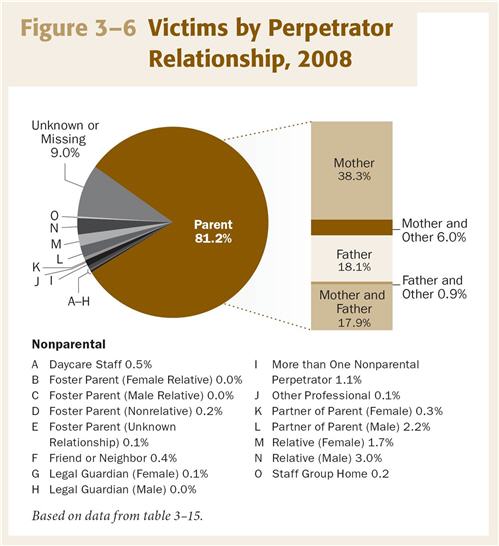
Think about it.  Have you ever known someone who acted appropriately online who ended up in danger?  If your answer is yes, is this really a function of the medium or the behavior which could occur online or offline?  The fact is that if we were really concerned about keeping children safe we wouldn’t be worrying about what they are doing online.  Instead we’d start with the home which is where most cases of child maltreatment occur.  As the below chart from the U.S. Department of Health and Human Services Administration for Children & Families Child Maltreatment Report indicates, 81% of those responsible for the maltreatment of children are indeed the child’s parents (http://www.acf.hhs.gov/programs/cb/pubs/cm08/table3_15.htm, 2009)


David Finkelhor, from the Crimes Against Children Research Center sheds some light on this issues during an interview with SafeKids.com (http://www.safekids.com/2008/05) stating:  

"It's not primarily having a social networking profile or giving out  personal information that puts kids at risk. What puts kids at risk are things     like having a lot of conflict with your parents, being depressed and socially isolated, being hyper, communicating with a lot of people who you don't  know, being willing to talk about sex online with people that you don't know."  


Similarly, the Congressional Internet Caucus Advisory Committee explains it this way:

It’s not giving out personal information that puts kid at risk. It’s not having a blog or a personal website that does that either. What puts kids in danger is being willing to talk about sex online with strangers or having a pattern of multiple risky activities on the web like going to sex sites and chat rooms, meeting lots of people there, kind of behaving in what we call like an internet daredevil.

Over at The Island View blog Tom Whitby says it well in his post The Blame Game. He says that given the hard facts it is clear our best defense for our children is education, not banning. Just as we should we would not ban family reunions, picnics, block parties, or other such functions, the Internet is also something we should not keep away from our children. The internet in general and social media in particular have the ability to not only start a revolution, but revolutionize the world.  It is a tool necessary not only for knowing about politics and elected officials, but one that is necessary if today’s children want to become one.  It is something that enables our children not to just publish for an audience of one (the teacher) or even some (the class), but a tool to connect with, communicate, with and create with others around the world who share their passions, interests, and talents.  


It’s time for adults to stop holding today’s youth in your past and instead join them in their worlds and empower and support them in discovering and developing effective ways to harness their future.  
You have read this article cyber safety / internet safety with the title internet safety. You can bookmark this page URL http://machining33.blogspot.com/2011/03/being-safe-online-is-being-safe-in-life.html. Thanks!

HOW DO I HELP MY CHILD LEARN TO USE THE INTERNET WISELY?


This is a handout I worked with others to create to share with family members interested in internet safety. Innovative educators may be interested in modifying this to the needs of their school community and sharing it with family members as part of a welcome packet for the new school year.
HOW DO I HELP MY CHILD LEARN TO USE THE INTERNET WISELY?

Many parents would agree their children know a lot more about using the Internet than they do, but finding the right balance between making sure our children are prepared for a high-tech world and protecting them from potentially dangerous situations are top priorities. Our children live in a world where cyber bullying, online predators, and online threats of violence are only a keystroke away. Websites that children visit must be age appropriate and constantly monitored by parents for content.

The Department of Education is now offering a comprehensive K-12 Internet safety curriculum to schools and workshops for parents. You can ask your school's parent coordinator, librarian, or technology specialist if your school plans to use it. If they do not have plans but are interested in launching the curriculum, encourage them to contact the Office of Parent Engagement, School Library Services, or Office of Instructional Technology to arrange for Internet safety training for parents, teachers, and students at your school. In the meantime, here are some tips for keeping your child safe.

How can I supervise Internet use at home?
  • Set ground rules. For example, how much time can they spend online and during what hours? Make sure your children understand the rules and agree to follow them.
  • Discuss with your children what they did on the Internet, who they talked to, what they saw or learned. Be intimately involved in their online life.
  • Use the Internet to communicate to the Internet generation. Ask your questions and deliver your concerns and rule reminders using instant messaging, text messaging, and emails. Let the parental voice be present in the virtual world.
  • Make time to sit and watch your children’s Internet habits regularly so they know they are being monitored. Pay attention to suspicious communications and ask to see what they’re talking about.
  • Explain to your children the importance of not revealing personal information online including address, school, places they like to visit, photos, and age.
  • Know your children’s passwords. Let your children know that you will be checking what they are doing online.
  • Go online with your children to find safe, acceptable, interesting, fun, and appropriate uses of the Internet.
  • Talk with your children about the dangers that you’re trying to protect them from so they can use your reasoning to make smart choices when you’re not around.
  • Become familiar with the parental controls (such as blocking and filtering) available through your Internet Service Provider, but ensure your children are armed with the knowledge of how to use technology safely even without these controls
  • Read the Privacy Policy of any site that asks your children for personal information
Supervising Internet use at school
What are some possible signs of inappropriate Internet use?
  • Your child spends a lot of time online or in chat rooms, especially at night.
  • Your child is secretive about what he/she is looking at online and quickly changes the site when you enter the room.
  • You find pornography stored on the computer.
  • Your child makes or receives communication from people who you don’t know or screen names you don’t recognize.
  • Your child receives gifts or packages from people you don’t know.
  • Your child uses someone else’s e-mail account.
  • Your child seems upset or withdrawn, especially after Internet use or when you question him/her about online activities.
Cyber Safety Resources
Center for Safe and Responsible Internet Use http://www.cyberbully.org/
The Center for Safe and Responsible Internet Use provides research and outreach services to address issues of the safe and responsible use of the Internet.
Crimes Against Children Research Center http://www.unh.edu/ccrc/
The mission of the Crimes against Children Research Center (CCRC) is to combat crimes against children by providing high quality research and statistics to the public, policy makers, law enforcement personnel, and other child welfare practitioners.
CyberSmart! http://www.cybersmartcurriculum.org/home/
This site offers a free student curriculum that empowers students to use the Internet safely, responsibly, and effectively.
Frontline: Growing Up Online
http://www.pbs.org/wgbh/pages/frontline/kidsonline/etc/synopsis.htmlFRONTLINE takes viewers inside the very public private worlds that kids are creating online, raising important questions about how the Internet is transforming childhood.GetNetWise http://getnetwise.org/
GetNetWise is a public service to help ensure that Internet users have safe, constructive, and educational or entertaining online experiences. The goal is for users to be "one click away" from the resources they need to make informed decisions about Internet use.
i-Safe http://www.isafe.org/
i-SAFE, a leader in Internet safety education, is endorsed by the U.S. Congress and incorporates classroom curriculum with dynamic community outreach to empower students, teachers, parents, law enforcement, and concerned adults to make the Internet a safer place.
Net Smartz http://www.netsmartz.org/
The National Center for Missing & Exploited Children (NCMEC) Internet safety website is geared toward parents, educators, law enforcement, teens, and kids.
Safe Kids http://www.safekids.com/child_safety.htm
This site provides advice for child safety on the Internet.

Additional Websites
For more internet safety resources and other useful information for innovative educators, visit my wiki at http://theinnovativeeducator.wikispaces.com/Internet+Safety+Resources.
You have read this article cyber bullying / cyber safety / Educating Innovatively / internet safety / online safety with the title internet safety. You can bookmark this page URL http://machining33.blogspot.com/2008/08/how-do-i-help-my-child-learn-to-use.html. Thanks!