Editor’s note: I feel fortunate to be living during a period in our history where for the first time we can easily form social learning circles that bring together from around the world, experts, authors, and others that share passions and can engage in rich and meaningful dialogue. The power of the technology to connect in ways never before possible is a game changer when it comes to learning. I have brought together one such amazing network of people who come together to think about and grapple with issues of ed reform and alternatives to the status quo with The Innovative Educator group. Here is a piece of that learning where education icon Deborah Meier shares some of her thoughts on the common core.
Its a nice thought--that it [Common Core] is offering a "common language". I wish it were. But common core as presently understood is a 13 year mandatory curriculum (developed largely by experts in testing, not the subject matter being tested) of what is to be taught--and in what sequence. It ignores the power of the interests and ideas that come from students and teachers as the basis for forming curriculum"--or of picking up from the world around us our "curriculum". Starting "where we are" intellectually and moving out from there--a common approach to thematic studies, for example. Or spending months on one "small" part of history or science, in order to be able to ask deeper questions and make deeper sense--rather than covering" a lot in order to be prepared for shallow tests. (Uncovering vs covering as we sometimes say.) etc, etc.
In the schools I’ve worked in we were able to spend months on the Constitution (if we chose to) and thus less on other aspects of American history. We could focus long enough and deeply enough to engage in projects, to question the evidence, to weigh one source over another, to imagine other possibilities, to look for patterns, to acknowledge disagreements, etc, etc. We could return to last year's themes and subject matter as it cropped up gain in the context of this year. It enabled Mission Hill to study the same topics in all grades, Kgtn to 8th grade at the same time and thus turn the whole school community into a shared learning experience, and to lie out the idea that we're never "done", there is always more to learn about the same subject in new and different ways.
It also enabled us to give younger students the experience of watching older students and vice versa as they observed each other's work. It turned our hallways into lively places for common study, made it easier to have a wide range of books on the same topics, bring in experts from outside, and on and on. In all the schools I've worked in and with we've also been able to set aside time from the exploration of our private, personal passions and see where they took us individually or as a group. It meant, of course, a different way of assessing young people's work. What we developed instead was a "common" set of questions, habits of mind we called them, for getting at what we were trying to make sense of. It also meant that we spent two years covering "less" than one year's high school physics course. And on and on.
Reading The Power of Their Ideas or In Schools We Trust may give you some sense of what such a curriculum might look like. Or read an old book--36 Children by Herb Kohl. Suggestions, from others?
Deborah Our conversations never die. You can join in anytime here.
You have read this article common core standards /
common standards /
deborah meier /
standardized tests
with the title common standards. You can bookmark this page URL http://machining33.blogspot.com/2012/10/common-core-ignores-power-of-interests.html. Thanks!
Professional writer and filmmaker Peter Kowalke didn't start reading until he was 11 which wasn't a problem for him because he didn't go to school. He explained it to me this way.
In school you read about doing things. I preferred to spend my early childhood doing things rather than reading about doing things.
He shared that this wasn't even something he thought about much. When learning to read independently became more of a priority for him, he began picking up reading and from that point on there was no turning back. Peter is not unusual. Dr. Peter Gray studies young people who were never schooled because they were unschooled or attended a Democratic school. The age these children learned to read has a wide range from about 4 - 14 years old. He found that when not coerced or forced, EVERY child learns to read well and by age 15 it is nearly impossible to tell the difference between a child who began reading at 4 and one who began in later years. (Note: This did not include children with severe cognitive impairment or those who don't speak English.) For those unfamiliar with unschooling or Democratic schooling, it provides children with a natural learning environment where they have access to plenty of resources and support, but learning is not forced and children are given the freedom to learn what they choose when they choose.
There is plenty of information, research, and numerous case studies that point to the fact learning to read and write will come as naturally to children as learning to walk and talk if provided a literate and supportive environment where passions are honored. Unfortunately, school was not designed this way. In school all children are expected to learn at the same rate and in the same way and if they don't, they are labeled, left back, and left out. What's more, in today's accountability climate, the same is happening to many of their teachers.
Most recently, we've been led to believe the cure to the literacy problem in our country can be solved by testing even more. It is thought that this will enable us to figure out where the problems lie within each student and determine who the "bad teachers" are so we can replace them with others who are good at getting the mandated results. But does obsessively dissecting what a student is doing really help them get better? Imagine if we did this while children were learning to walk or talk? Can't all this lab rat analysis take the joy out of what the child is doing? We also need to ask ourselves, are our best teachers really those who can produce good test takers? Ironically, there is new research coming out that indicates that standardized testing leads to a dramatic decrease in the joy of reading. Perhaps even more importantly, education expert Alfie Kohn explain how teachers are killing students motivation to read by relying on coercion and extrinsic inducements.
And, come on! Let's face it. Teachers were trained to develop materials for teaching and they are experts at assessment. Why on earth do we need to pay someone else to do the work teachers were hired to do?
If 2/3rds of children aren't reading on level, isn't it clear that perhaps it is not the children or the teachers that are the issue??? Maybe the developmental level identified is wrong or maybe there is purposely a curriculum in place that makes us want to do more testing, test-prepping, and publishing of materials to meet a "crisis" that is non-existent for those who venture to learn to read and write without the benefit of school.
Perhaps this chart below explains the impetus to do this to children. With 5.3 billion dollars out there for the taking, there is a significant incentive to perpetuate the problem.
A little less coercion, force, and mandating that every person achieves by date of manufacture can go a long way in saving our children and saving dollars for our education system. Will this happen? Probably not. There are too many people who stand to profit off our children.
You can keep the conversation about this going on my Facebook page here or in my learning group here.
You have read this article common standards /
DIY Learning /
literacy /
standardized tests /
unschooling
with the title common standards. You can bookmark this page URL http://machining33.blogspot.com/2012/01/are-schools-making-our-children.html. Thanks!
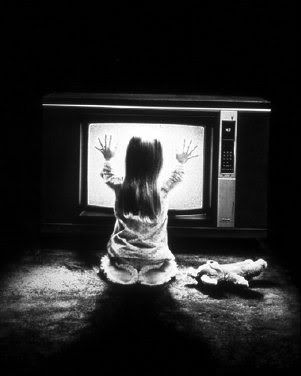
This was five-year-old Carol Anne's ominous announcement made at her parents' home while starring into a static television when referring to the presence of unknown beings in her home. Their antics, benign at first, such as moving and stacking the kitchen table chairs soon turn quite disturbing as Poltergeist fans can attest. Like the unknown beings in the movie, the newly released draft of the Common Core Standards have had a ghostly presence to the masses who have seen pictures of Governors linked in arms with smiles on their faces as they unite to support the release of standards for a nation. While I do agree the premise of having international or at least national standards, makes sense, I do have concerns that these at first benign, perhaps even good-intention-seeming standards must be treated with EXTREME caution.
I shared my primary fears around these standards last October in my post All Children Left Behind - Common Standards for Our Student's Past. My concerns presented themselves again yesterday as a DOE official shared with a gleam in his eye that The Common Core Standards draft had been released and this was going to mean a whole new era of even more rigorous assessments for our students.
Ahhhhh!!!!! What concerns me as I heard these words is not the standards, but the man behind the curtain, or the screen if you will. Though most of America never has never taken a peak, many who have are scared. As Chris Lehmann shared in his blog last fall, "This Core Standards movement should scare everyone who believes that meaning and learning is still most powerfully made in the spaces that students and teachers share. More than teachers, students, or state administrators, the group that stands most to gain from national standards and a national test is the education-industrial complex.
At the same time, Tom Hoffman shares in his blog, "We are inviting testing companies to determine the future of our schools with virtually no accountability or public input. These standards were developed by two testing companies, the College Board and ACT, with help from a nebulous non-profit, Achieve, Inc. No high performing educational system in the world would consider giving testing companies this much control over their standards and curriculum. It is absurd. He also shares that many standards were selected because they are easier and cheaper to score reliably on a standardized test.
To get a clear picture of what this really looked like, here is the list of the working group for the language arts standards. Notice the representation of testing companies (most) verses K-12 teachers (are there any?) verses students (what students?).
Sara Clough, Director, Elementary and Secondary School Programs, Development, Education Division, ACT, Inc.
David Coleman, Founder, Student Achievement Partners
Sally Hampton, Senior Fellow for Literacy, America's Choice
Joel Harris, Director, English Language Arts Curriculum and Standards, Research and Development, The College Board
Beth Hart, Senior Assessment Specialist, Research and Development, The College Board
John Kraman, Associate Director, Research, Achieve
Laura McGiffert Slover, Vice President, Content and Policy Research, Achieve
Nina Metzner, Senior Test Development Associate—Language Arts, Elementary and Secondary School Programs, Development, Education Division, ACT, Inc.
Sherri Miller, Assistant Vice President, Educational Planning and Assessment System (EPAS) Development, Education Division, ACT, Inc.
Sandy Murphy, Professor Emeritus, University of California – Davis
Jim Patterson, Senior Program Development Associate—Language Arts, Elementary and Secondary School Programs, Development, Education Division, ACT, Inc.
Sue Pimentel, Co-Founder, StandardsWork; English Language Arts Consultant, Achieve
Natasha Vasavada, Senior Director, Standards and Curriculum Alignment Services, Research and Development, The College Board
Martha Vockley, Principal and Founder, VockleyLang, LLC
I personally spoke to a prolifically published author, esteemed expert, and valued contributor to other literacy policy documents who shared that she too was concerned by the choice to leave her and other accomplished pedagogues out of the conversation.
As I jumped over to take a look quick look at the standards, I was already perplexed. What were previously English Language Arts are now Common Core State Standards for English Language Arts and Literacy in History/Social Studies and Science. Huh??? What on earth does that mean? Did they just try to lump everything together? Anyhow, a deeper dive is indeed in order and I'm interested to hear and read what other EDUCATORS and hopefully STUDENTS have to say. I was pleased to see there was a way to Submit Feedback on the site and I encourage teachers, and principals to do so, and to help their students do so as well. An improvement to the feedback submission process would be full transparency and enabling the public to see the feedback blog style of one other. They are here for sure, and the secret ballot-style request for feedback where ghost-like contributors who can't see one another until the edited, censored results are shared, frightens me.
You have read this article common core standards /
common standards
with the title common standards. You can bookmark this page URL http://machining33.blogspot.com/2010/03/they-here-common-core-standards.html. Thanks!
The common standards movement is underway in 48 states in our nation and these standards are set to be finalized this month. I’ve been reading what the smart educators I respect are saying about these standards. Here is the summation. These are poorly written standards being put in place with testing companies at the forefront of the decision making. These ed testing companies as well as other big educational businesses/curriculum providers have a huge financial profit to gain after the adoption of these standards because a nation can now adopt their curriculum. There is no alignment or recognition of the changing face of education and the digital worlds in which our students are existing, reading, writing, interacting, producing, and publishing.
What can we do? Provide feedback today about the standards by visiting http://tinyurl.com/fixthestandards. It literally takes less than five minutes. You can use my words above, the words of others below or write your own.
Below are excerpts from other educators about their take on the standards, links to each resource, and where to visit for more information.
One look at the reading standards and you can’t help but be left with the impression that the authors have never “read” anything much beyond words on paper and that the idea of “remix” and even links are outside of their experience. There is nothing here about how reading and writing in online and digital spaces changes the interaction, nothing about the social interactions that readers and writers will have around texts that are changing rapidly and substantially.
In all of this, the thing that most frustrates me both in the talk about national standards and national assessments and the whole “Race to the Top” bunk that is coming out of the administration is just a total lack of vision, this sense that nothing has fundamentally changed, that this is the same old classroom with the same old expectations and the same old ways of proving them that we’ve had forever. I’m not saying we don’t need assessments, but there’s a lot of required learning right now that few if any standards are addressing.
Replacing one externally-created checklist with another undoubtedly more voluminous one will not help one child.
You cannot have “core” standards without additional standardized testing. Now districts already addicted to testing will have a more potent hallucinogenic with which they can poison public education.
Teachers and students are terrorized by testing and externally-imposed curricular mandates.
This Core Standards movement should scare everyone who believes that meaning and learning is still most powerfully made in the spaces that students and teachers share. More than teachers, students, state administrators, the group that stands most to gain from national standards and a national test is the education-industrial complex.
This isn't about whether or not people think that all students should be able to write a thesis statement. This is about how students are taught that information, how they are assessed on that information, and on the role of big business in teaching and assessing them.
I find them hard to read, because I think they are poorly written, but standards often are.
We are inviting testing companies to determine the future of our schools with virtually no accountability or public input.
These standards were developed by two testing companies, the College Board and ACT, with help from a nebulous non-profit, Achieve, Inc. It is essential to understand this when reading the Common Standards; it explains many of their odd choices. In the example above, the obvious interpretation is that they chose to define the standard as "support or challenge assertions" rather than "construct a response or interpretation," as every international example they cited did, because the former is much easier and cheaper to score reliably on a standardized test.
No high performing educational system in the world would consider giving testing companies this much control over their standards and curriculum. It is absurd.
These standards are specifically designed to not be the sole responsibility of English teachers, so any data system properly linking student performance on related tests to teachers would attribute the results to all subject area teachers.
The idea that these English Language Arts standards are "internationally benchmarked" to those of high performing countries is a farce, except insofar as the benchmarking demonstrates the low level and quality of our proposed standards.
No country with high reading scores in international assessments conceives of the discipline of Language Arts as being limited to literacy skills, or "college- and career-readiness," as the Common Standards do. Thus, the Common Standards are narrower, lower and shallower than the English Language Arts standards of high performing countries.
Zhao describes how schools have to keep pace with a world that is being dramatically transformed by globalization, the “death of distance,” and digital technology. Instead of falling in line with mandates for standardization, his prescription is for educators to
Expand the definition of success beyond math and reading test scores.
Personalize schooling so that every student has opportunity to learn.
View schools as enterprises that embrace globalization and digital technology.
Gotham Schools in New York City is running this series on the Common Standards:
Note that many of the handy links to benchmarked standards under "see evidence" don't point to the right place, so if you want to be complete you need to use...
England's standards make an easy point of comparison if you're curious about what actual benchmarked English Language Arts common standards might look like.
You have read this article chris lehmann /
common standards /
will richardson
with the title common standards. You can bookmark this page URL http://machining33.blogspot.com/2009/10/all-children-left-behind-common.html. Thanks!

 Its a nice thought--that it [Common Core] is offering a "common language". I wish it were. But common core as presently understood is a 13 year mandatory curriculum (developed largely by experts in testing, not the subject matter being tested) of what is to be taught--and in what sequence. It ignores the power of the interests and ideas that come from students and teachers as the basis for forming curriculum"--or of picking up from the world around us our "curriculum". Starting "where we are" intellectually and moving out from there--a common approach to thematic studies, for example. Or spending months on one "small" part of history or science, in order to be able to ask deeper questions and make deeper sense--rather than covering" a lot in order to be prepared for shallow tests. (Uncovering vs covering as we sometimes say.) etc, etc.